Stronger for Longer: Why GFRP Mesh Delivers Better Strength in Concrete
Superior crack control and long-term slab durability
Strength is the foundation of performance in reinforced concrete slabs and decks. Mesh reinforcement plays a vital role in:
- Controlling crack spread
- Distributing loads
- Maintaining long-term durability
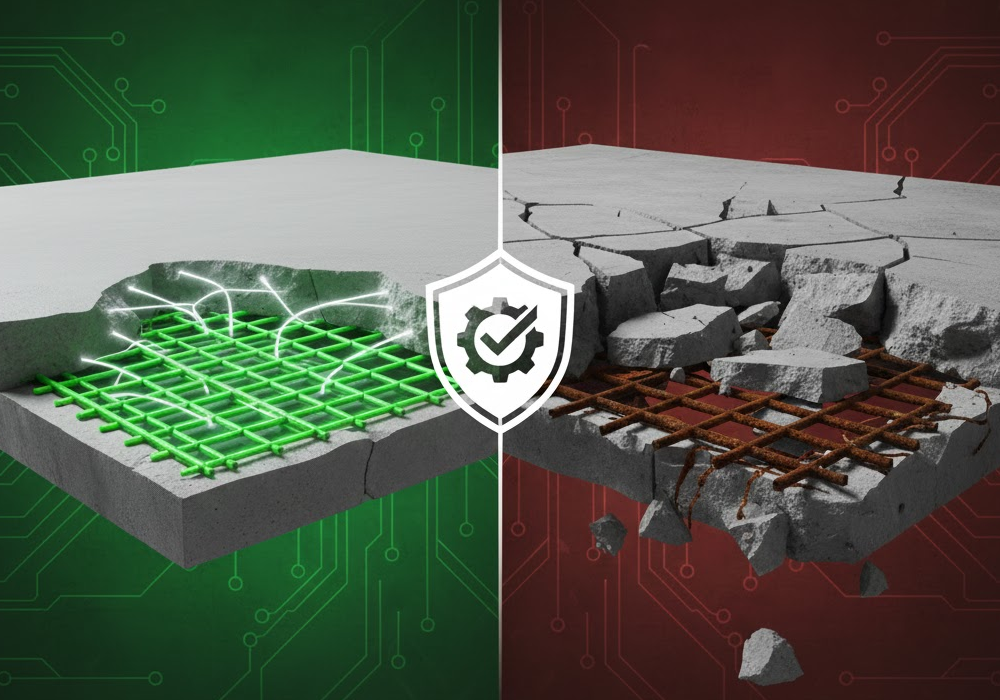
However, steel mesh loses strength over time due to corrosion — and that directly weakens concrete performance.
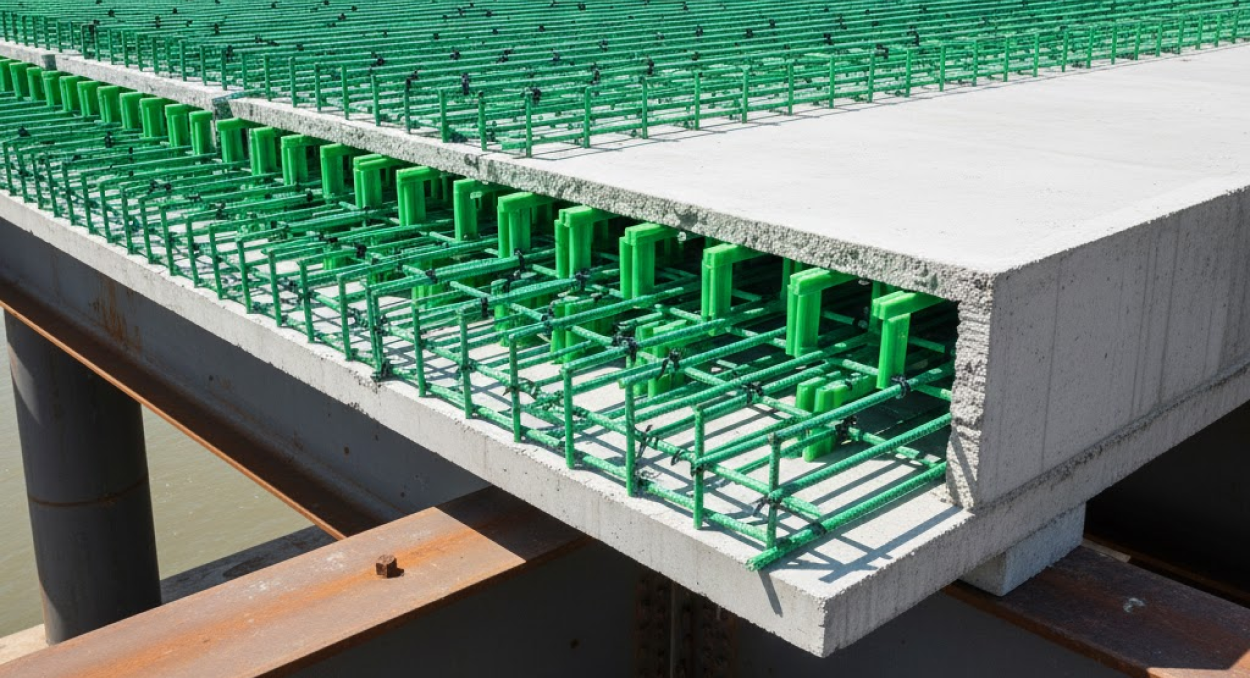
GFRP Mesh (Glass Fiber Reinforced Polymer) provides high tensile strength that never degrades — ensuring crack control and structural reliability for 75–100+ years.
Strength Comparison: GFRP Mesh vs Steel Mesh
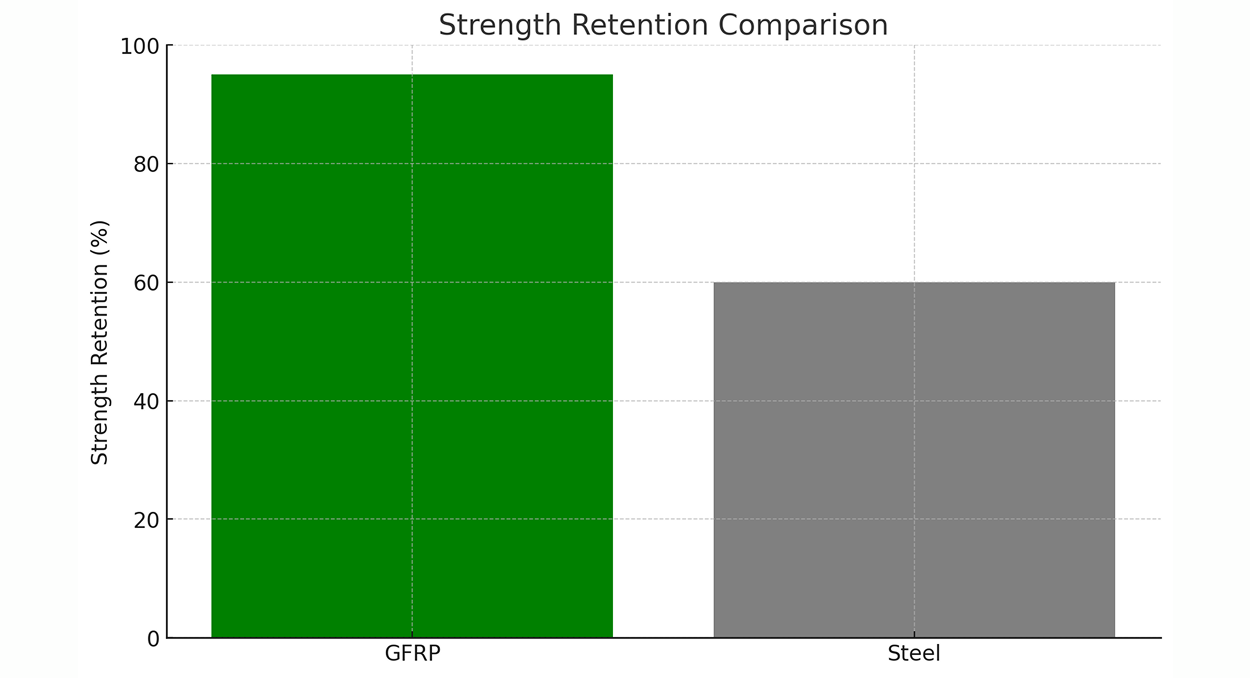
Steel mesh begins strong but loses most of its tensile capacity once corrosion sets in.
Strength Factor
GFRP Mesh
Steel Mesh
Initial Tensile Strength
Strong-to-Excellent
Strong
Strength Retention
No change
Weakens with corrosion
Crack Resistance Over Time
Constant
Decreases
Long-Term Durability
Very High
Low
Strength-to-Weight Ratio Advantage
GFRP offers higher performance while being ~4X lighter than steel.
This enables:
- Better crack distribution
- Faster installation
- Safer manual handling
- Strong performance in seismic or vibration environments
Lightweight does not mean weaker — It means more efficient strength in the structure.
Bond + Strength = Better Crack Control
Proper bond enables tensile strength to work. GFRP Mesh is engineered with a textured, sand-coated surface:
- Crack widths remain narrower
- Water and chemicals cannot enter
- Slabs remain in service much longer
Dynamic Load & Vibration Strength
Especially critical across:
- Parking decks
- Heavy load slabs
- Hospital & lab floors
- Industrial locations with machinery
teel weakens as it corrodes — GFRP remains strong under repeated load cycles
Application-Based Strength Advantages
01 - Residential & Commercial
- Prevents widespread cracking
- Better long-term slab performance
02 - Bridges & Highways
- Traffic creates constant high-cycle stress
- GFRP strength remains stable → safer surfaces
03 - Marine & Coastal Decks
- Salt attacks steel → strength loss
- GFRP = no corrosion, no strength reduction
04 - Industrial Facilities
- High tensile performance supports heavy machinery
- Strength durability = safer industrial operations
05 - Wastewater Treatment Plants
- Slabs exposed to wet conditions still maintain strength
- Reduced risk of chemical-induced cracking
06 - Healthcare & Labs
- Strong reinforcement maintains floor vibration control
- Important for MRI and operating room stability
07 - LEED & Sustainable Buildings
- Longer structural life → lower carbon footprint
- Stronger slabs reduce demolition and waste
Real Case Example — Parking Garage
GFRP Mesh structure:
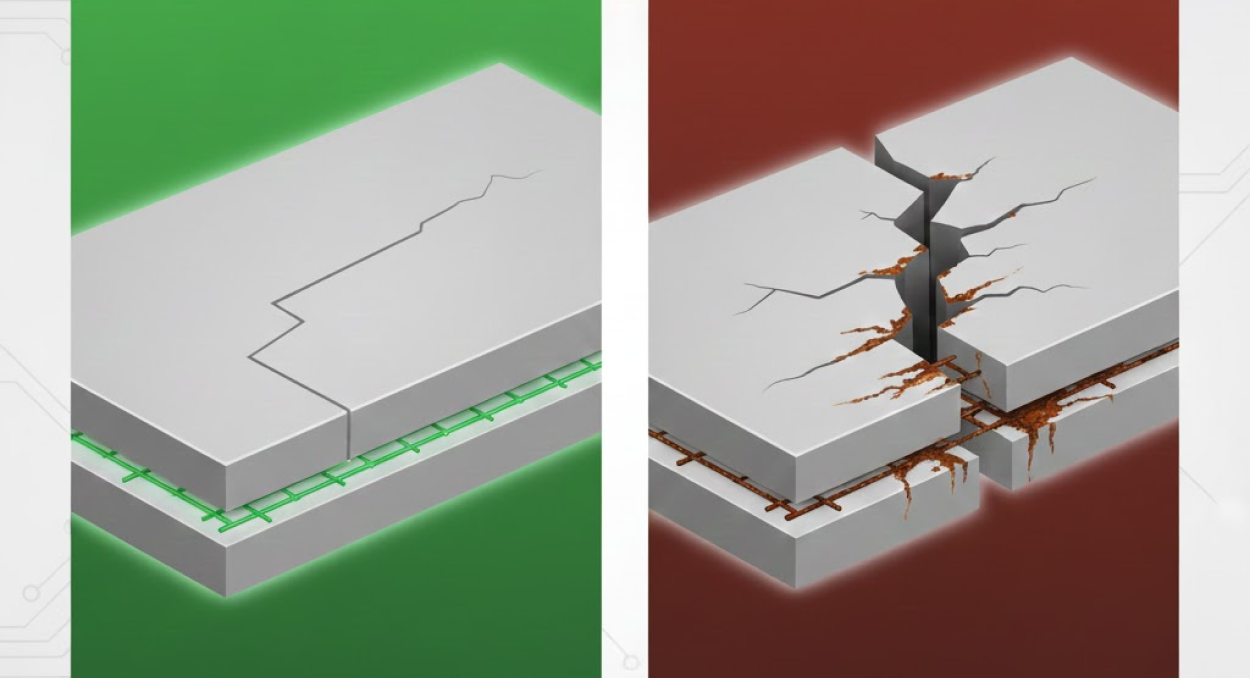
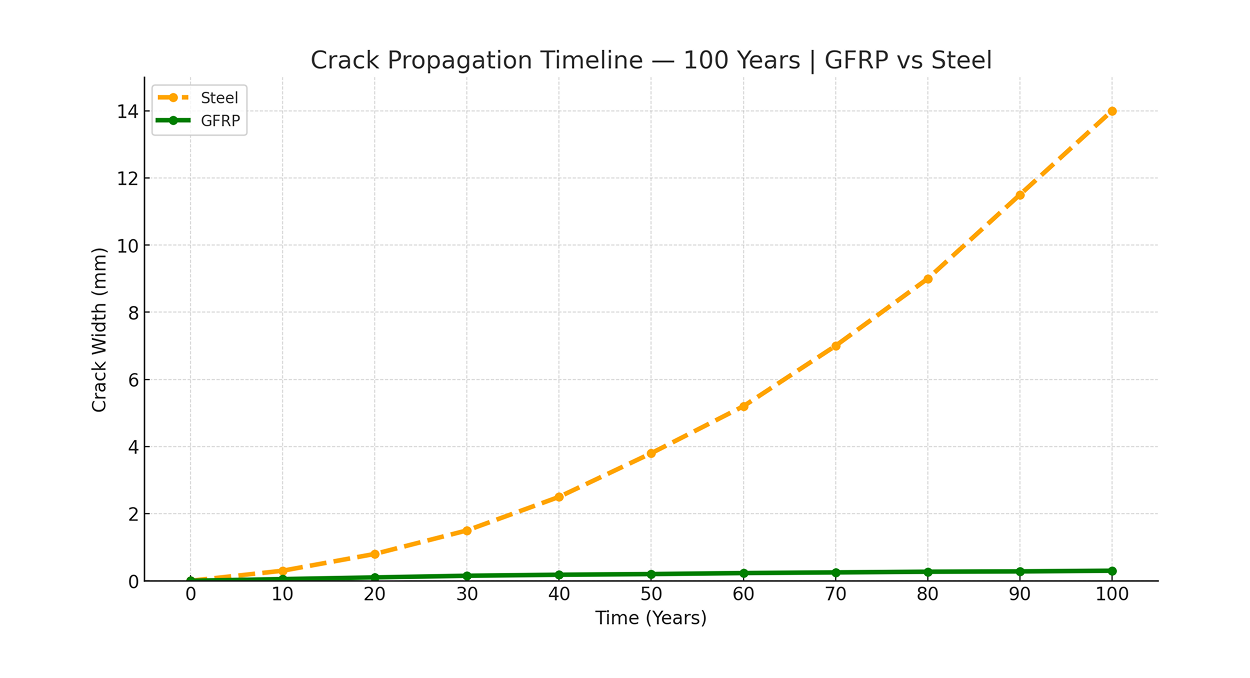
- Cracks stay tight
- Strength remains constant
- No expensive resurfacing
Steel Mesh structure:
- Cracks widen over time
- Water intrusion accelerates steel corrosion
- Structural repairs become frequent and expensive
Strength Retention Over 100-Year Design Life
Year
GFRP Strength
Steel Strength
100
High
Critical Failure Risk
Conclusion
Strength is not just about day-one performance. It’s about keeping structures strong for decades
GFRP Mesh delivers:
- High tensile strength
- Reliable bond for crack control
- No strength loss over time
- Optimal performance under heavy and dynamic loads
Zero corrosion isn’t a luxury — It's the new standard for modern construction. — visit: www.gogbars.com