Stronger Bond = Stronger Concrete: The GFRP Mesh Advantage
Superior crack control and slab durability through consistent bond strength
In reinforced concrete slabs and decks, strength alone isn’t enough. The real performance comes from how well the reinforcement bonds with the concrete.
Bond strength ensures:
- Load is transferred effectively
- Cracks remain tight and manageable
- Slabs stay strong and safe for decades
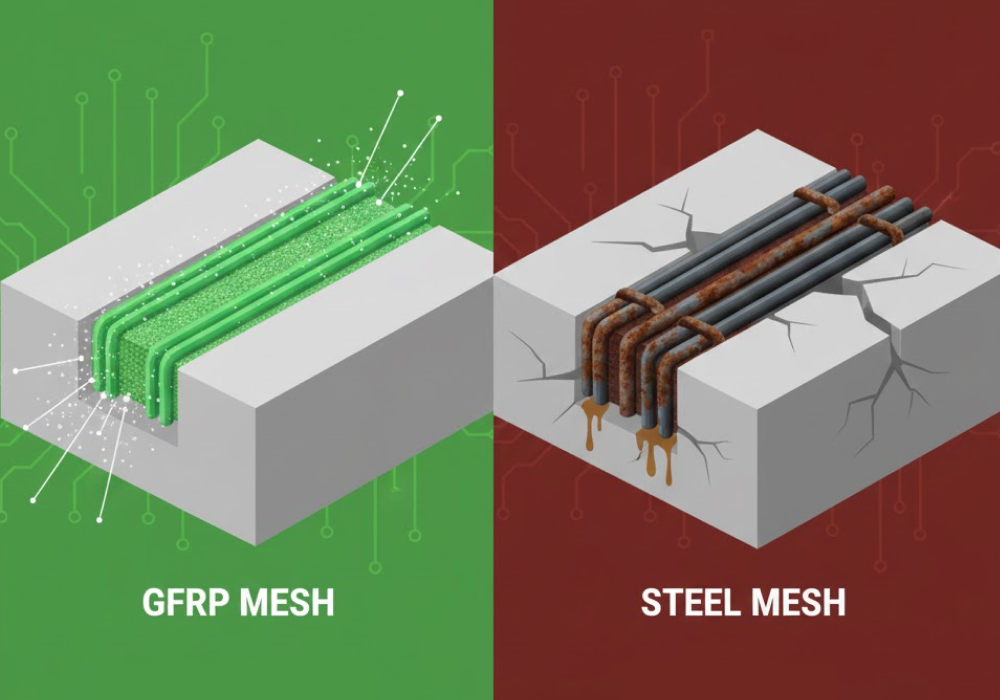
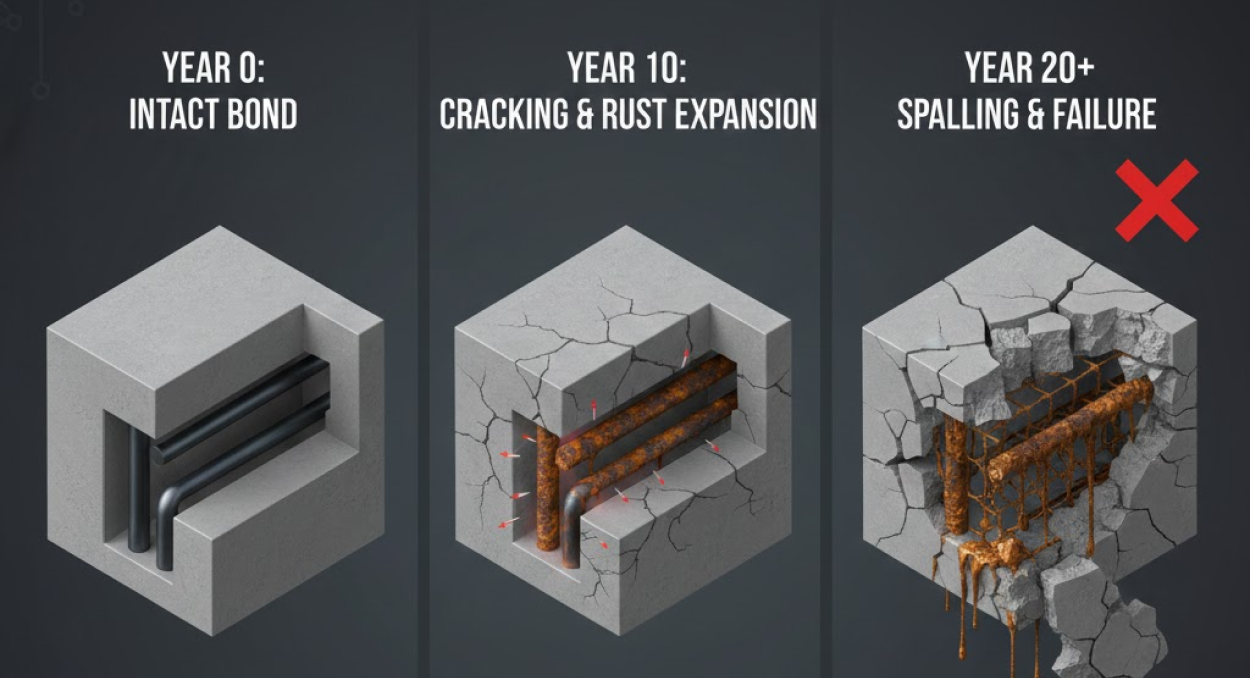
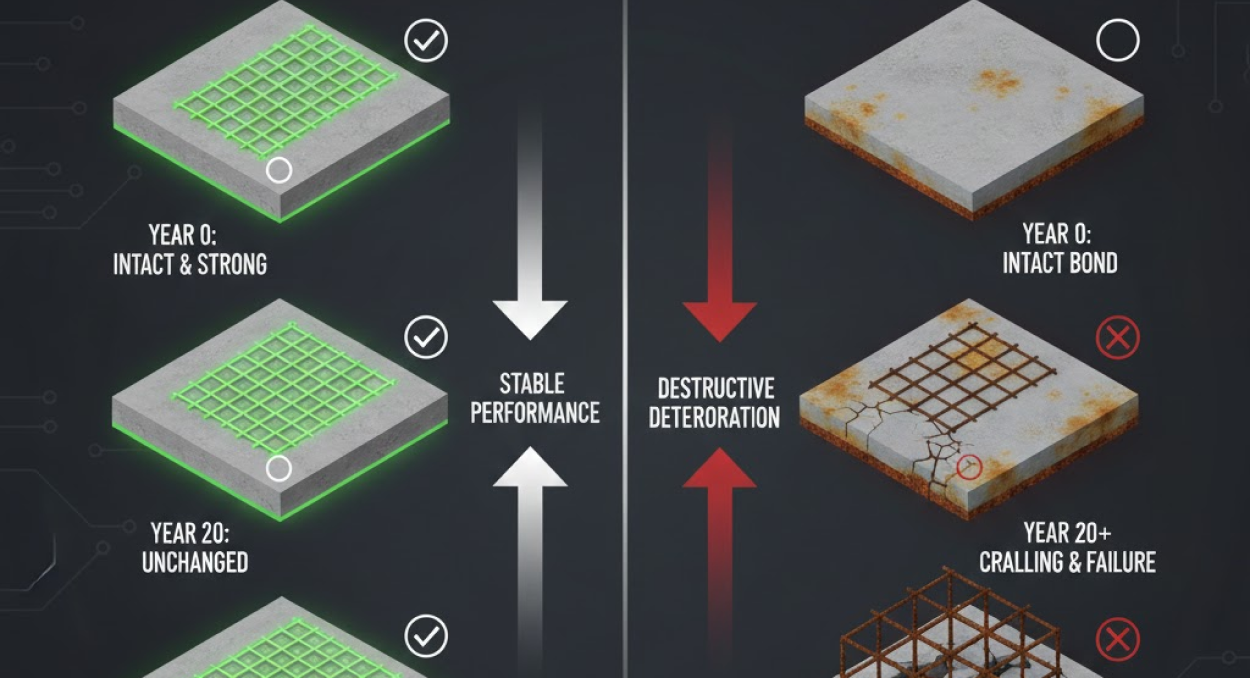
Steel mesh begins with good bond — but loses it quickly as corrosion sets in near the slab surface. GFRP Mesh (Glass Fiber Reinforced Polymer) maintains a high, stable bond throughout the structure’s entire life.
Why Bond Strength Matters in Concrete Slabs
Mesh reinforcement is placed near surface, the area most exposed to:
- Moisture
- Salts
- Abrasion
- Environmental weather cycles
When steel corrodes:
- Bond breaks
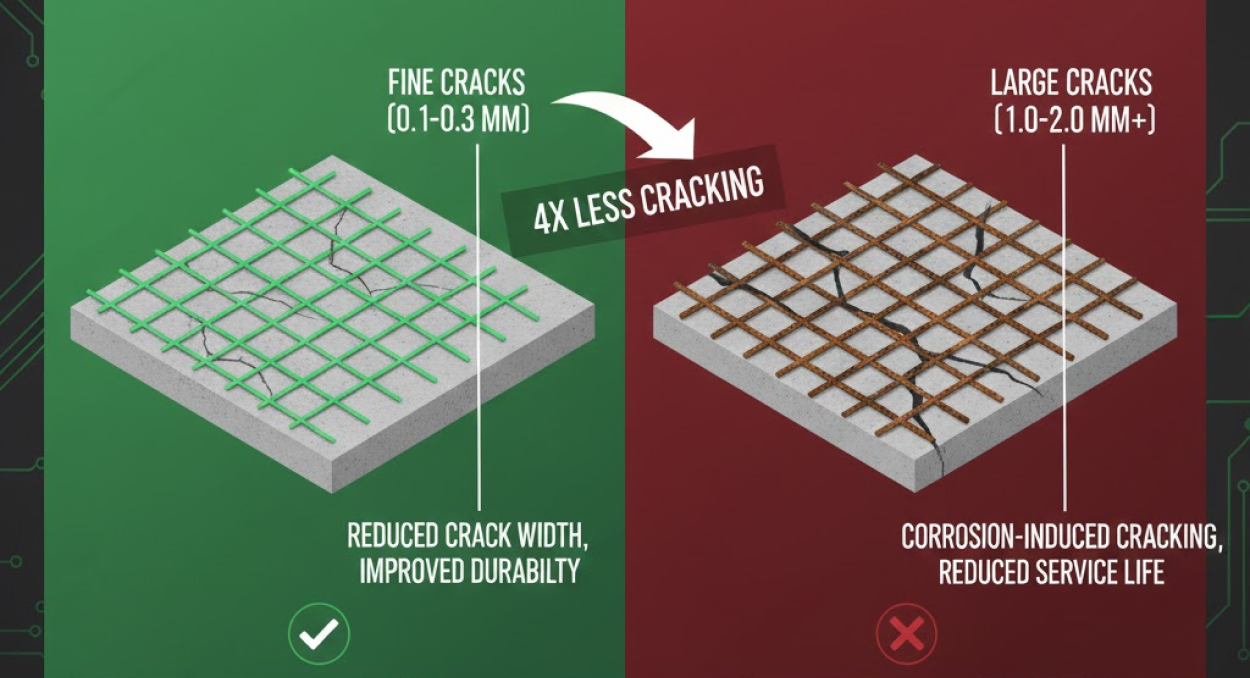
- Cracks widen
- Concrete spalls and delaminates
How GFRP Mesh Maintains Strong Bond Strength
GFRP is engineered to retain bond indefinitely:
- Textured, sand-coated surface for enhanced grip
- No rust → no weakening of surrounding concrete
- Stable anchorage during load and vibration cycles
- Maintains crack control for 75–100+ years
Bond Performance Comparison
Feature
GFRP Mesh
Steel Mesh
Initial Bond Strength
Excellent
Good
Exposure to Moisture
No impact
Rapid decline
Crack Control Over Time
Strong
Poor
Risk of Delamination
Very low
High
Crack Control = Longevity & Safety
GFRP Mesh keeps cracks:
- Tighter
- Less visible
- Less likely to propagate
GNarrow cracks prevent:
- Water intrusion
- Slab delamination
- Structural stress concentration
Application-Based Bond Strength Benefits
1 - Residential & Commercial Slabs
- Superior bond controls shrinkage cracks
- Floors stay smooth and safe long-term
2 - Parking Structures & Podiums
- Heavy traffic creates dynamic loads
- Strong bond prevents deck deterioration
3 - Marine & Coastal Boardwalks
- Chloride exposure destroys steel bond
- GFRP stays fully bonded in salt environments
4 - Industrial Flooring
- Vibration + machinery loads test anchorage
- GFRP Mesh keeps slabs structurally active
5 - Wastewater Treatment Plants
- Water + chemicals = steel bond failure
- GFRP bond stability = watertight performance
6 - Healthcare & Laboratories
- Better bond = better vibration absorption
- Critical in surgical and imaging rooms
7 - LEED & Sustainable Structures
- Longer bond stability = lower maintenance
- Reduced demolition = reduced waste
Real Case Example — Parking Deck Bond Failure
GFRP Mesh Outcome:
- No corrosion
- Strong bond remains
- No delamination or cracking
- Structure stays operational & safe
Steel Mesh Outcome:
- Corrosion → bond breaks
- Surface cracks widen
- Water leakage → slab deterioration
- Costly resurfacing every 7–10 years
Bond Strength ROI Table
Cost Factor
GFRP Mesh
Steel Mesh
Crack Repair
None
Frequent
Surface Delamination Risk
Minimal
High
Service Life
Very Long
Moderate
Operational Shutdowns
None
Costly
Safety & Reliability Benefits
A strong bond ensures:
- No sudden slab failure
- No hidden deterioration
- No weakening under fatigue loads
- No risk from water infiltration
ROI Table — Total Labor Savings
Conclusion
Bond strength is the key to reinforced concrete performance. If bond fails, the slab fails.
GFRP Mesh delivers:
- Superior initial bonding
- No corrosion-induced degradation
- Strong crack control
- Long-term slab durability
- Lower maintenance cost
Zero corrosion isn’t a luxury — It's the new standard for modern construction. — visit: www.gogbars.com