Build Green With GFRP Mesh: The Sustainable Reinforcement Choice
Durability that reduces waste, carbon, and lifetime impact
Sustainability is now a core requirement in construction. Architects, contractors, and developers must not only build strong — but also build responsibly.
Traditional steel mesh creates sustainability challenges:
- Corrosion leads to constant resurfacing
- Repairs cause landfill waste
- Equipment-based maintenance increases carbon emissions
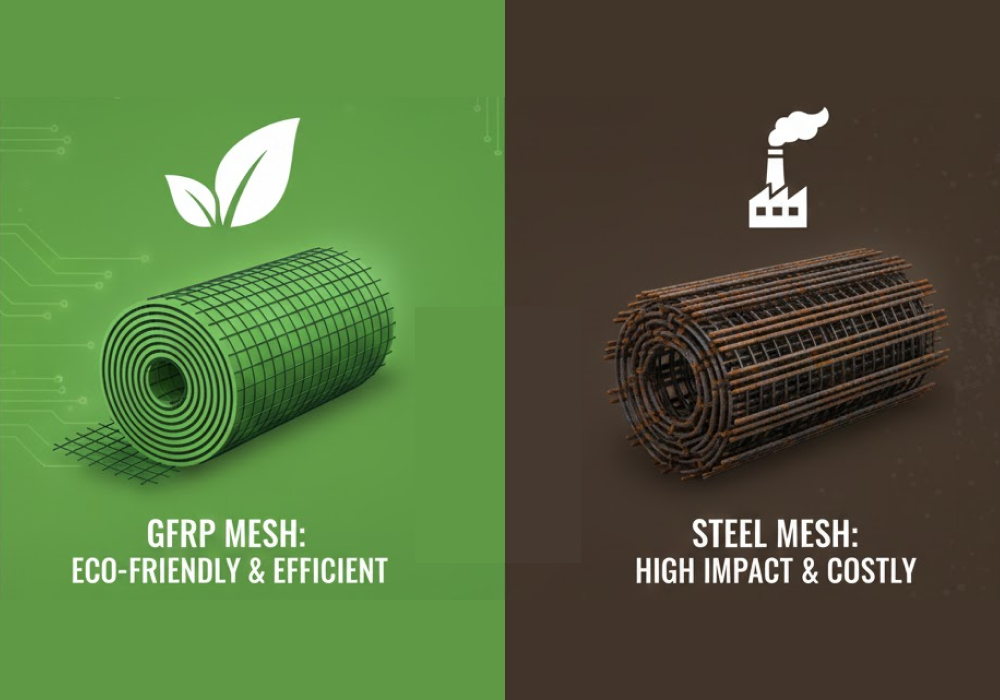
GFRP Mesh (Glass Fiber Reinforced Polymer) eliminates corrosion
- Eliminating waste and maintenance cycles
- Making it a future-proof and eco-friendly reinforcement solution.
The Sustainability Problem With Steel Mesh
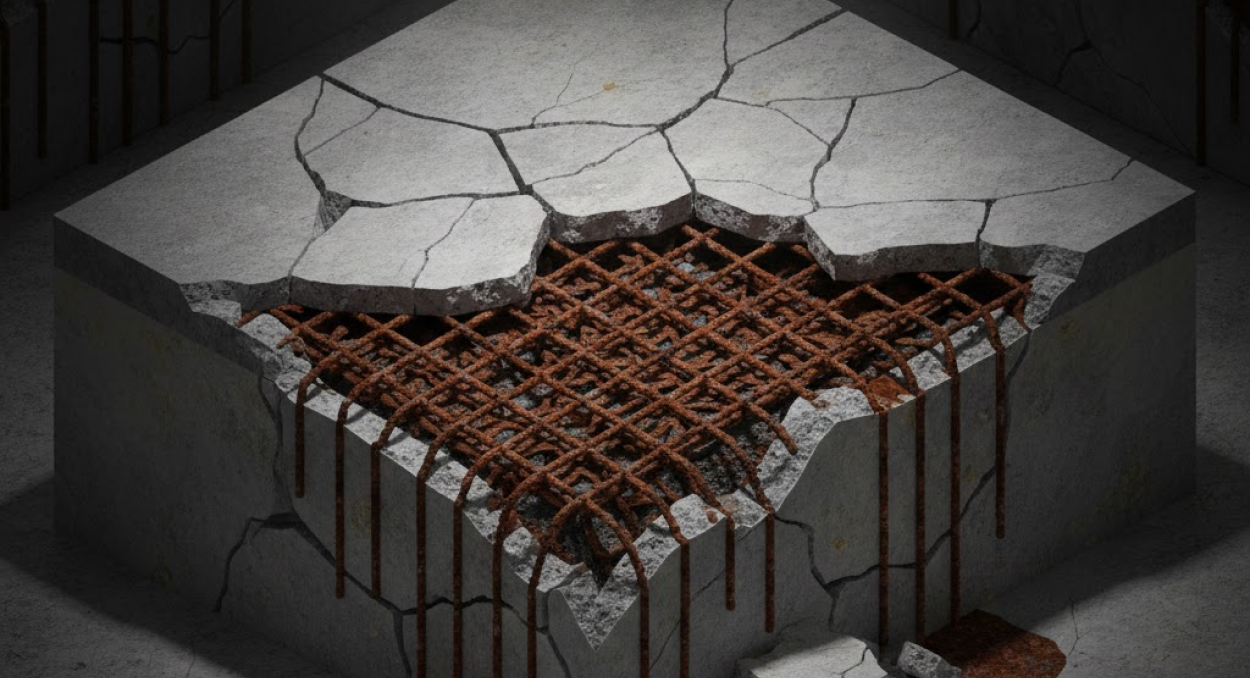
Steel mesh is placed near the concrete surface the most vulnerable location to moisture and chlorides
Corrosion effects:
- Rust expansion → slab delamination
- Surface cracking → waterproofing failure
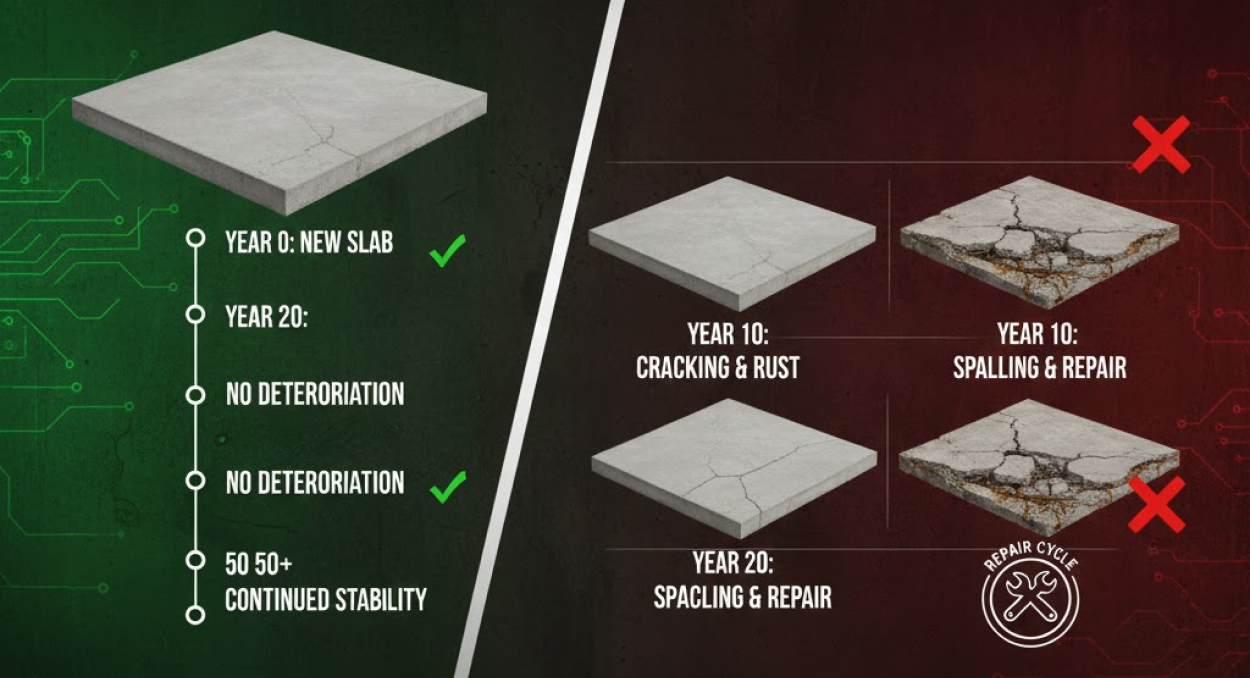
- Costly resurfacing every 5–10 years
- Concrete ending up in landfills
- CO₂ emissions from repair trucks and machinery
How GFRP Mesh Enhances Sustainability
GFRP Mesh is engineered to solve the sustainability issues steel creates:
- Zero corrosion → no slab failure from rust
- No resurfacing waste
- Lifespan of 75–100+ years
- Lightweight → reduces transport emissions
- No coatings = no VOCs or chemical toxins
- Cleaner construction sites
Lifecycle Carbon & Waste Impact: GFRP vs Steel
Over its lifetime, steel mesh demands:
- Replacements
- Resurfacing cycles
- Heavy machinery use
- Extra concrete production
GFRP Mesh avoids all of that.
Sustainability Measure
GFRP Mesh
Steel Mesh
Repair Waste Generated
Zero
Very High
Transport Emissions
Low
High
Carbon Footprint Over 75+ Years
Very Low
Very High
Material Lifespan
Very Long
Short
Circular Economy Alignment
Strong
Poor
Longer Service Life = Lower Planetary Impact
When corrosion repairs are eliminated:
- No demolition debris
- No landfill pollution
- No production emissions from new steel
- No traffic closures and detours
- No repeated energy + labor waste
How GFRP Mesh Supports LEED & Green Projects
GFRP Mesh contributes to key environmental certifications and goals:
- Material Optimization Credits
- Reduced embodied carbon
- Zero corrosion repairs = lower operational carbon
- Supports long-life infrastructure mandates
Application-Based Sustainability Advantages
Sector
Sustainability Benefit
Residential & Commercial
Stops demolition waste from floor repairs
Parking Decks
Avoids resurfacing CO₂ emissions
Marine & Coastal
Prevents corrosion debris harming water ecosystems
Industrial Floors
Reduces repair shutdown emissions
Wastewater Plants
Eliminates contamination leaks from cracking
Healthcare
Prevents waste and disruption in critical environments
LEED Buildings
Ensures performance for green certification
Real Case Example — Parking Garage Sustainability
GFRP Mesh Slab:
- No corrosion → no resurfacing
- Carbon and waste reduction across entire lifecycle
- Structure stays safe and clean for long life
Steel Mesh Slab:
- Major surface repairs every decade
- Concrete waste hauled to landfill
- Crane equipment + repairs = high fuel use
- Operational disruption = lost revenue
Circular Economy & Environmental Value
GFRP Mesh contributes to:
- Better resource efficiency
- Single-cycle reinforcement instead of multiple replacements
- Maximum structural lifespan
- Zero toxic residue in soil or water
Conclusion
Steel mesh forces repairs, waste, and emissions into every project. GFRP Mesh eliminates the problem before it starts.
Sustainability Benefits of GFRP Mesh:
- Zero corrosion
- Zero repair waste
- Zero landfill impact
- Low-carbon logistics
- Long-life reinforcement
- LEED-friendly performance
Zero corrosion isn’t a luxury — It's the new standard for modern construction. — visit: www.gogbars.com