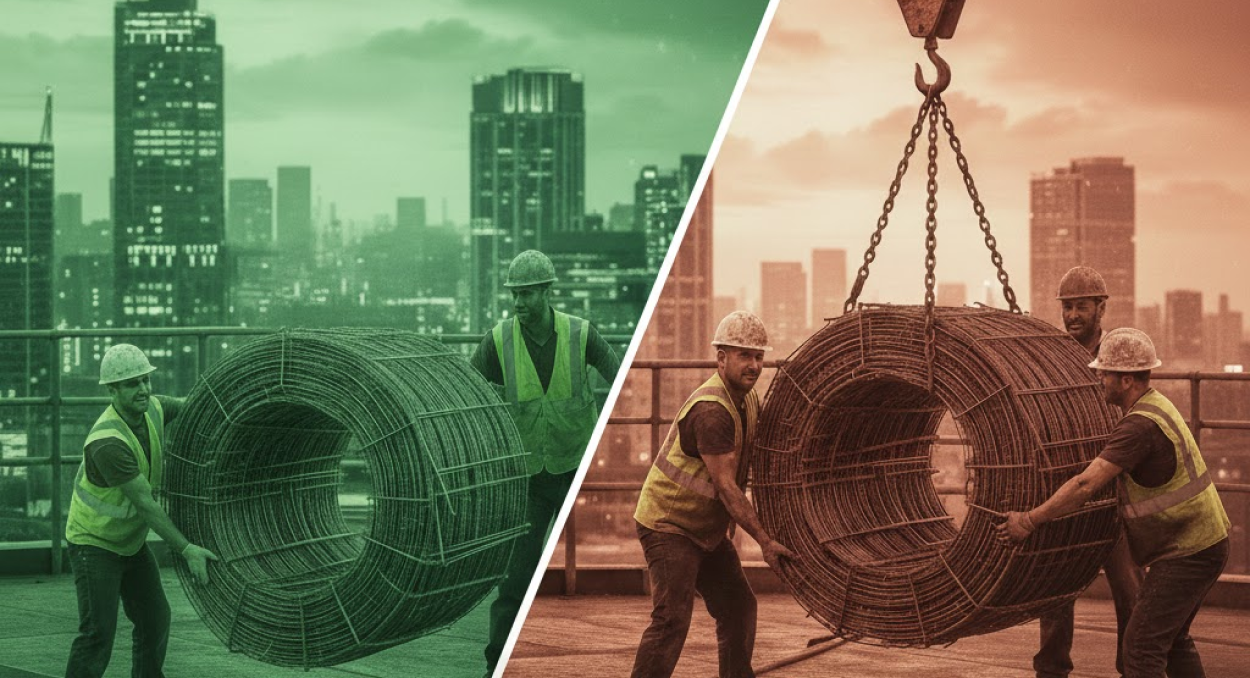
Faster Installation with Less Labor: How GFRP Mesh Reduces Project Costs
Lightweight reinforcement for faster, safer construction
Labor cost usually makes up 40–60% of the total reinforcement installation budget — especially for slabs, podiums, and decks.
Steel mesh may seem simple, but:
- It requires large crews to move
- Machinery to lift bundles
- Safety procedures for cutting
- Slower installation cycles
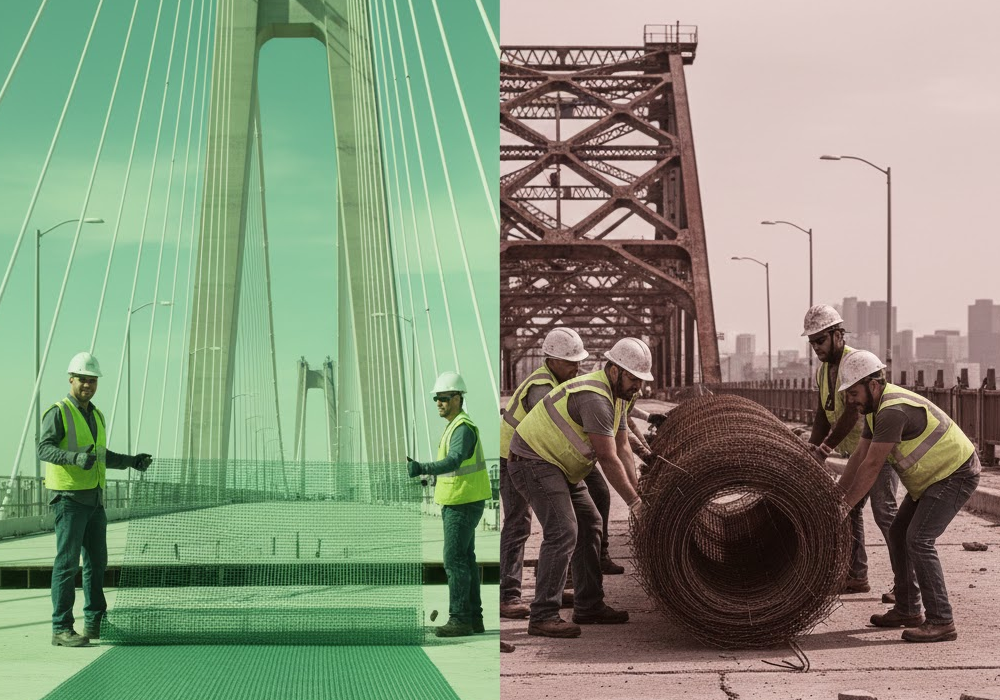
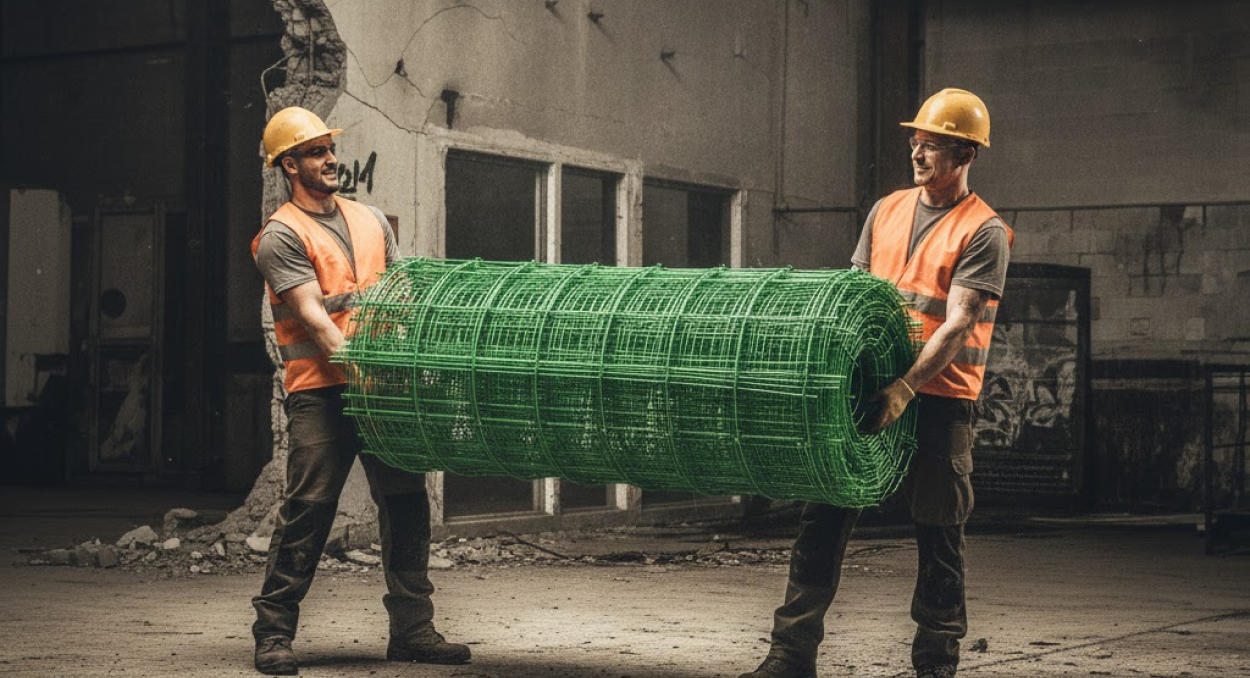
GFRP Mesh (Glass Fiber Reinforced Polymer) changes the game. It is lightweight, easy to cut, fast to handle, and safe — cutting labor time and costs significantly
Why Steel Mesh Drives Labor Cost Up
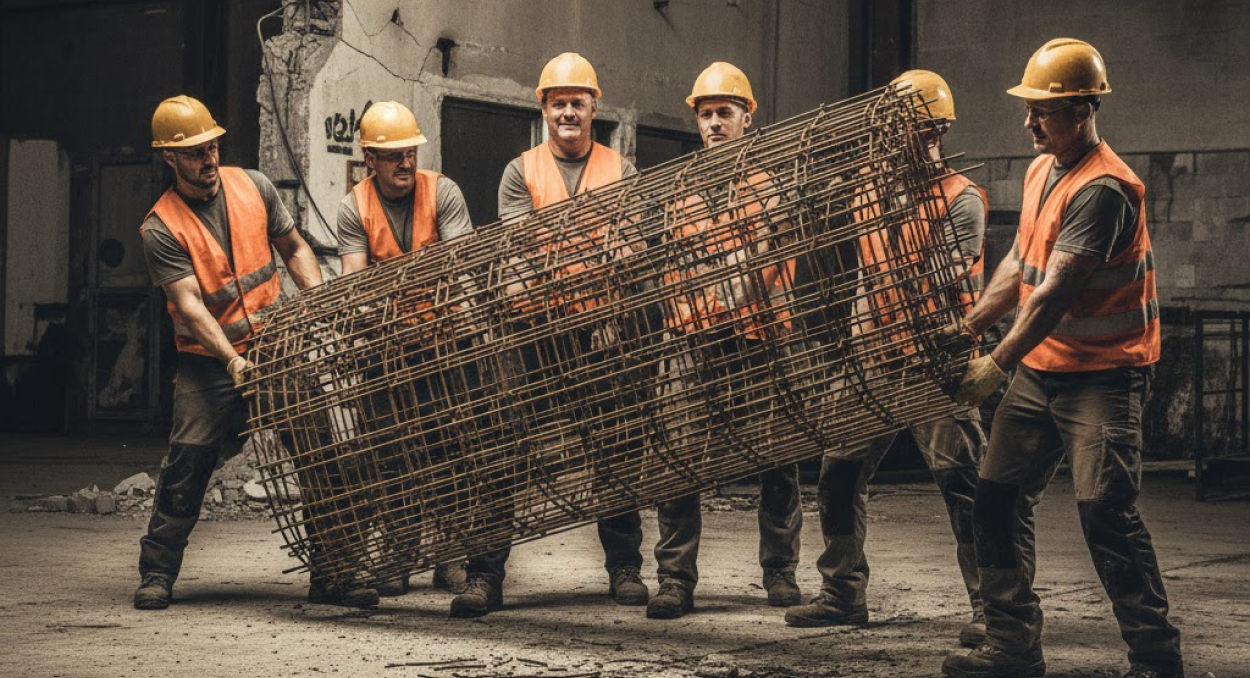
Steel mesh remains heavy, rigid, and hard to maneuver:
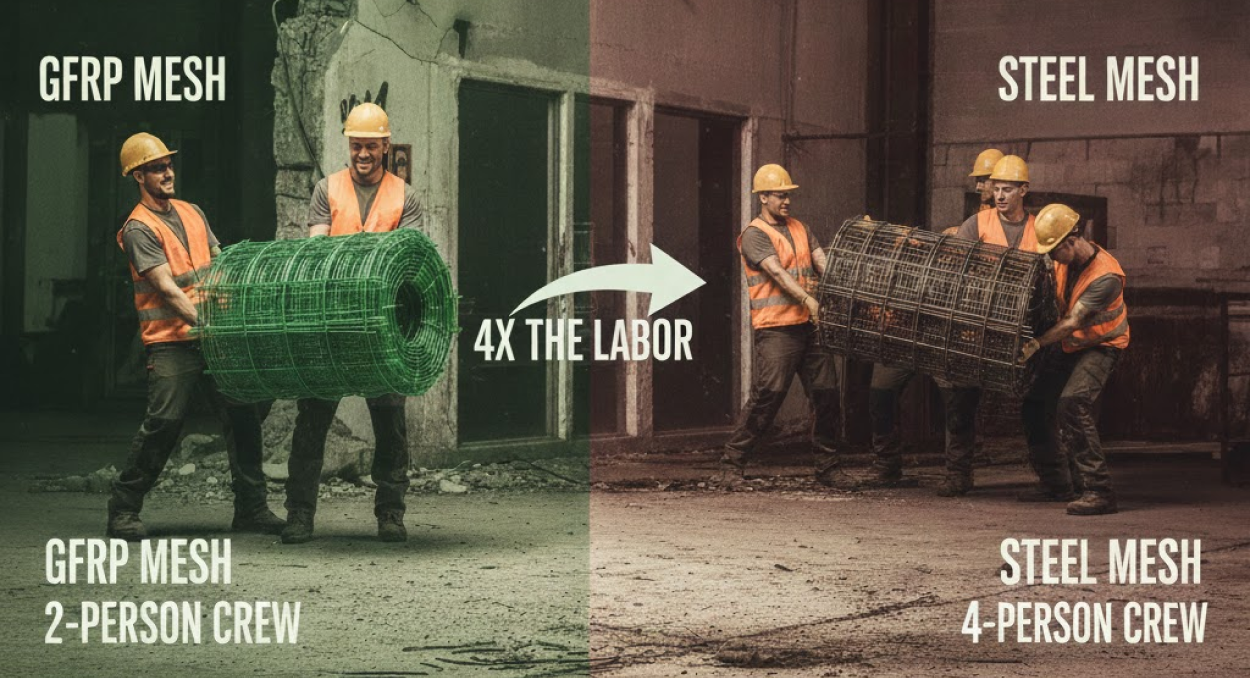
- 6–8 workers required to carry and position bundles
- Cranes or forklifts needed on many jobs
- Workers fatigue quickly → delays and safety concerns
- Cutting requires grinders and PPE for sparks
GFRP Mesh: Designed for Labor Efficiency
GFRP Mesh advantages on site:
- Can be carried by 2–3 workers
- Faster staging and placement
- Simple cutting with hand tools
- No special coatings → no extra handling steps
- Fewer installation delays in tight-access areas
Application-Based Labor Cost Savings
Sector
How GFRP Mesh Saves Labor Cost
Residential & Commercial
Faster cycles on multi-story slabs
Parking Structures & Podiums
Cuts installation time during lane closures
Marine & Coastal
Avoids expensive barge machinery
Industrial
Allows easy maneuvering around operating equipment
Wastewater Plants
Efficient installation in tight, wet spaces
Healthcare & Labs
Minimal disruption to active facilities
LEED Buildings
Reduced energy and labor for machinery
Real Jobsite Example — Parking Deck
Let’s compare installation impact:
Labor Factor
GFRP Mesh
Steel Mesh
Equipment Requirement
Manual placement
Crane/lift
Installation Duration
1 day
2 days
Labor Cost Impact
30–50% lower
High
Logistics & Handling Savings
On a typical slab project:
- Steel mesh requires machinery to unload
- GFRP mesh can be unloaded and staged by workers
Logistics impact per truckload:
Logistics Item
GFRP Mesh
Steel Mesh
Truckloads Required
1
3-4
Crew Needed to Stage
Small crew
Large crew
Fuel & Crane Rental Cost
None/Low
High
Safety = Direct Labor Cost Savings
GFRP Mesh improves safety by:
- Reduced strain injuries
- No sparks from cutting
- Non-conductive → safer around electrical equipment
- Fewer slips and material handling accidents
ROI Table — Total Labor Savings
Cost Category
GFRP Mesh
Steel Mesh
Installation Time
Fast
Slow
Equipment Needs
Minimal
Expensive
Safety Risk Costs
Low
High
Total Labor Cost
Lowest
Highest
Practical Example: High-Rise Podium
GFRP Mesh:
- Manual lifts → no crane time
- Faster per-floor progress
- Eliminates project bottlenecks
Steel Mesh:
- Crane dependency
- Slower placement
- Congested staging area
Conclusion
Labor efficiency is a defining factor in construction profit and scheduling. Steel mesh slows both — increasing cost and risk.
GFRP Mesh delivers:
- Fewer workers needed
- Faster installation
- No heavy equipment for handling
- Safer workflows
- Lower total labor expense
Zero corrosion isn’t a luxury — It's the new standard for modern construction. — visit: www.gogbars.com